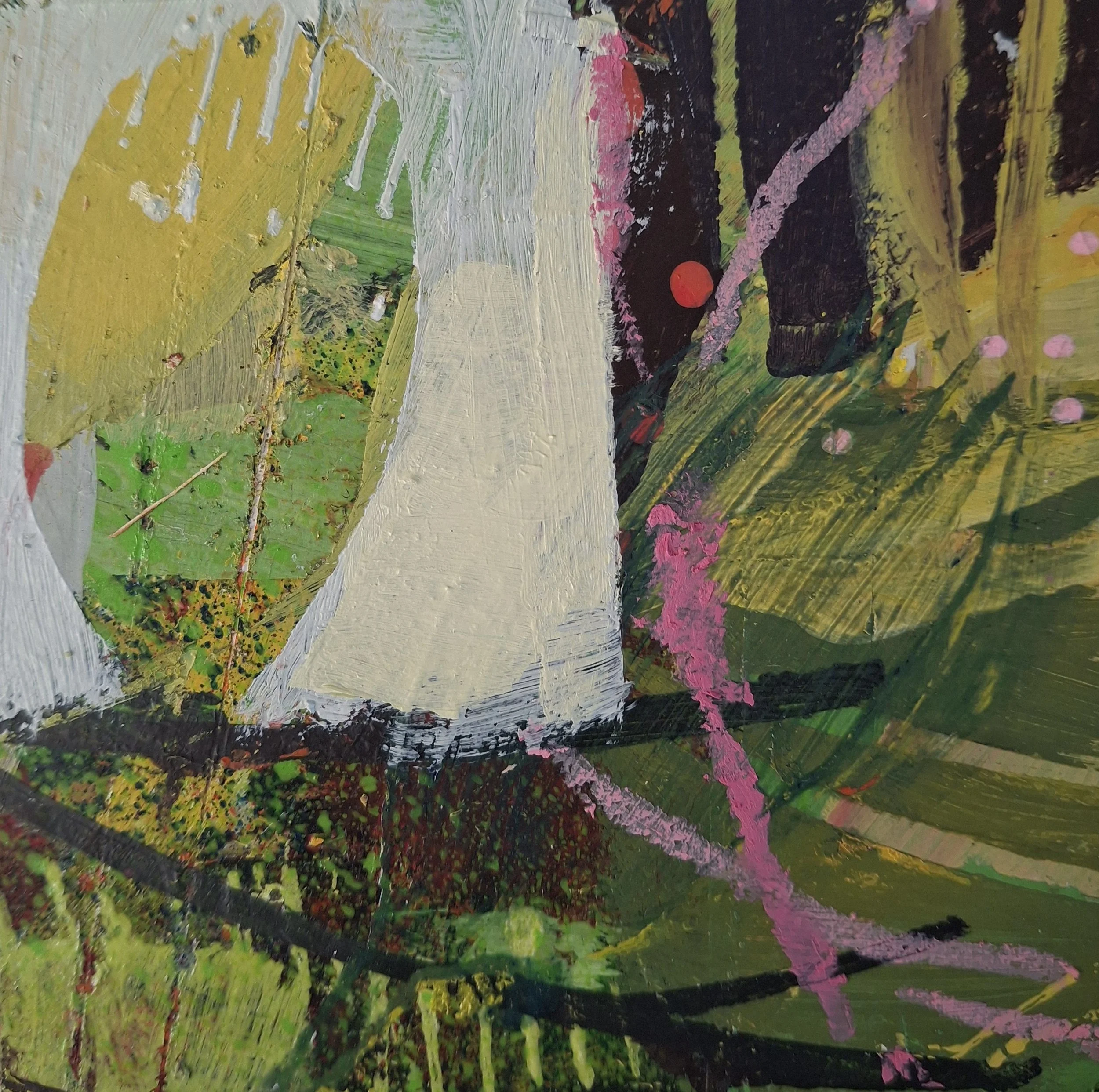
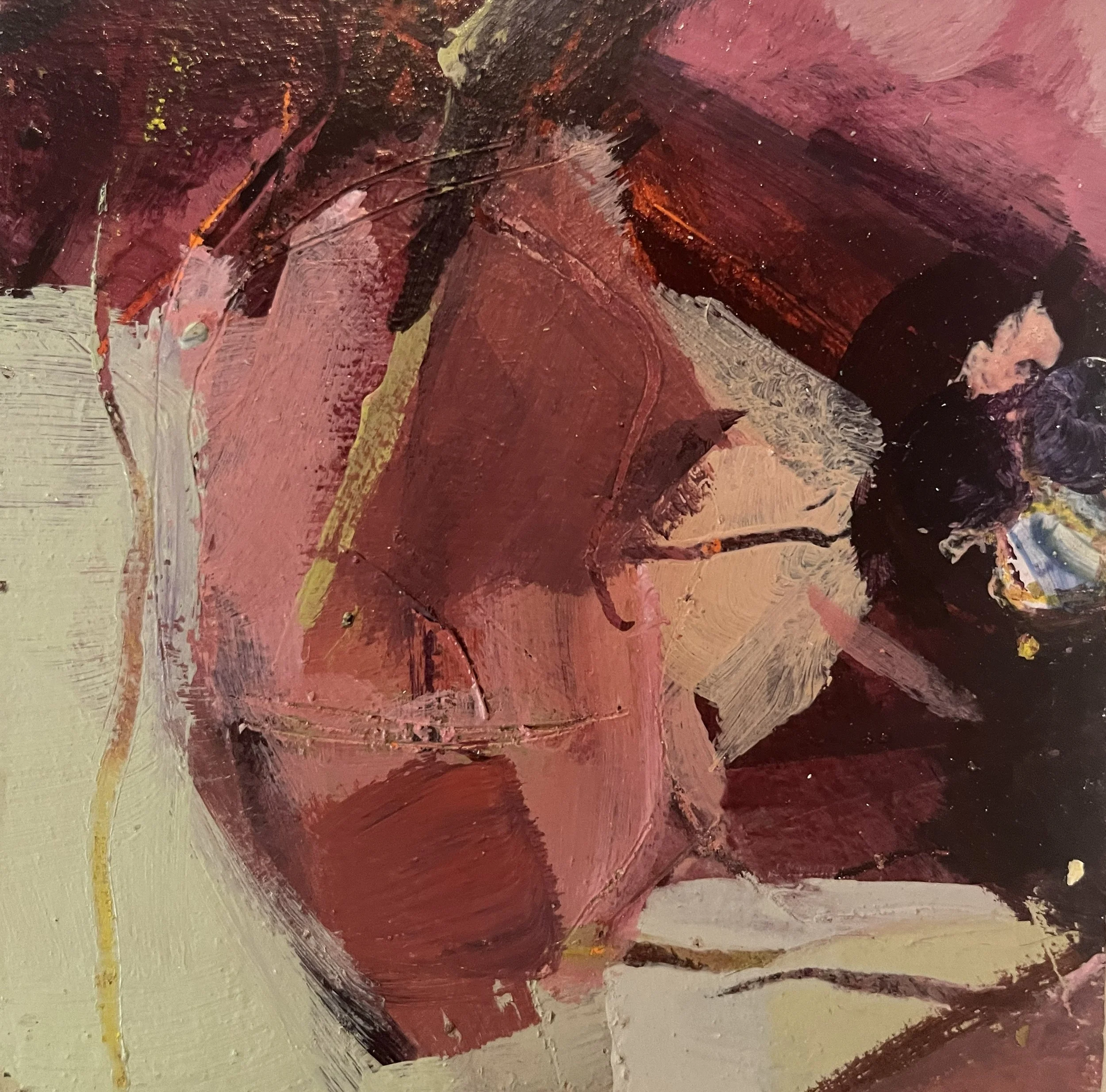
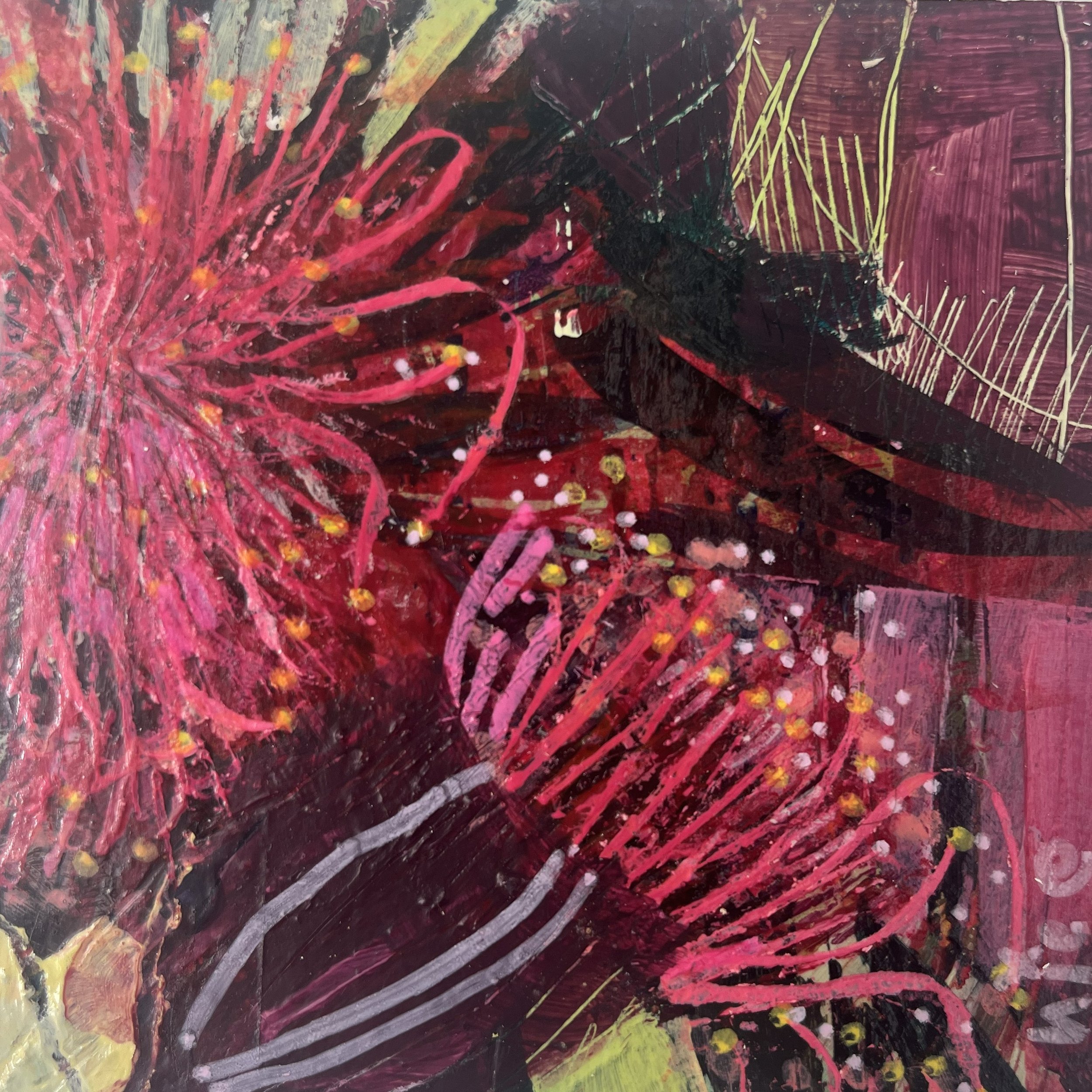
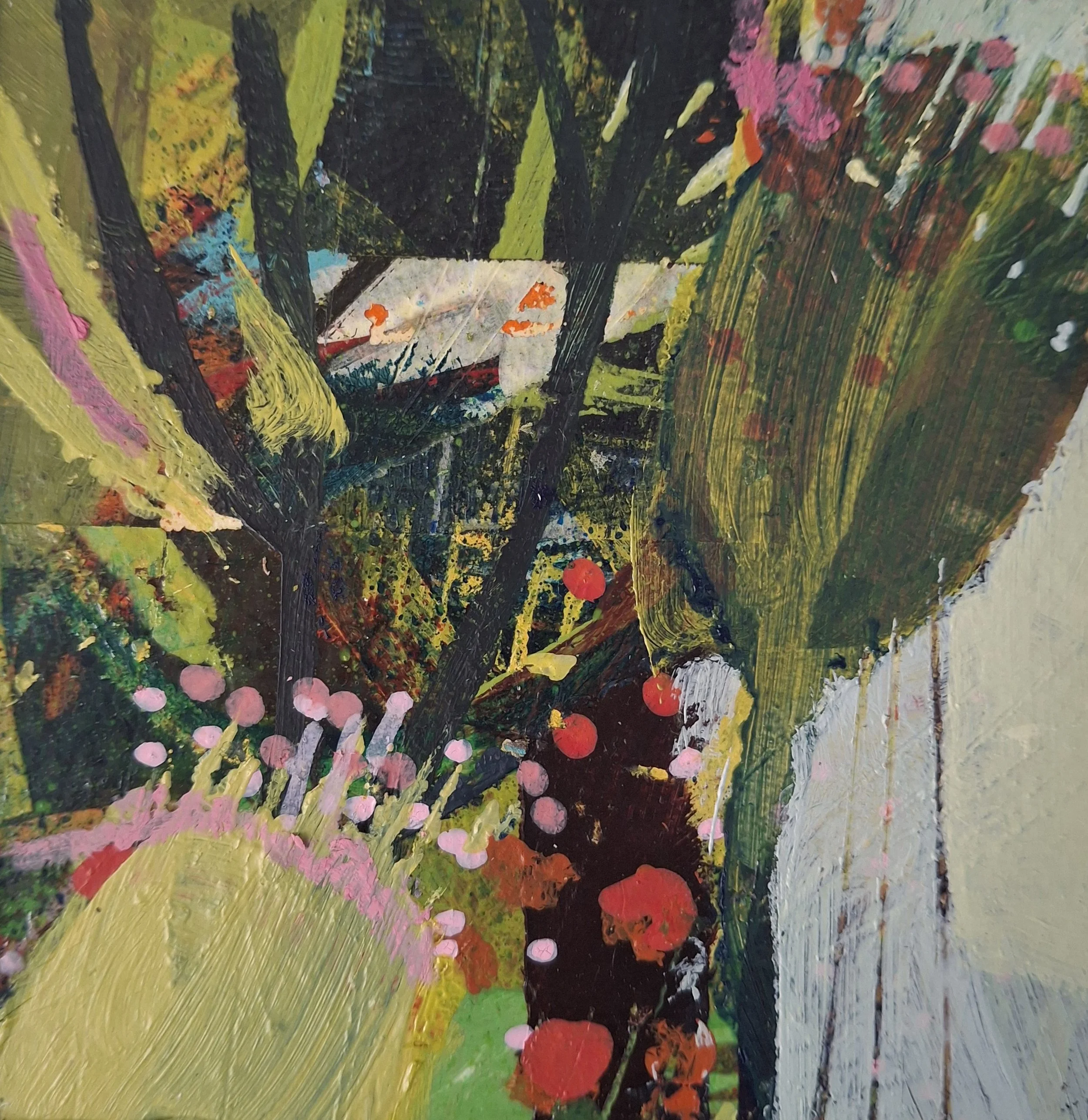
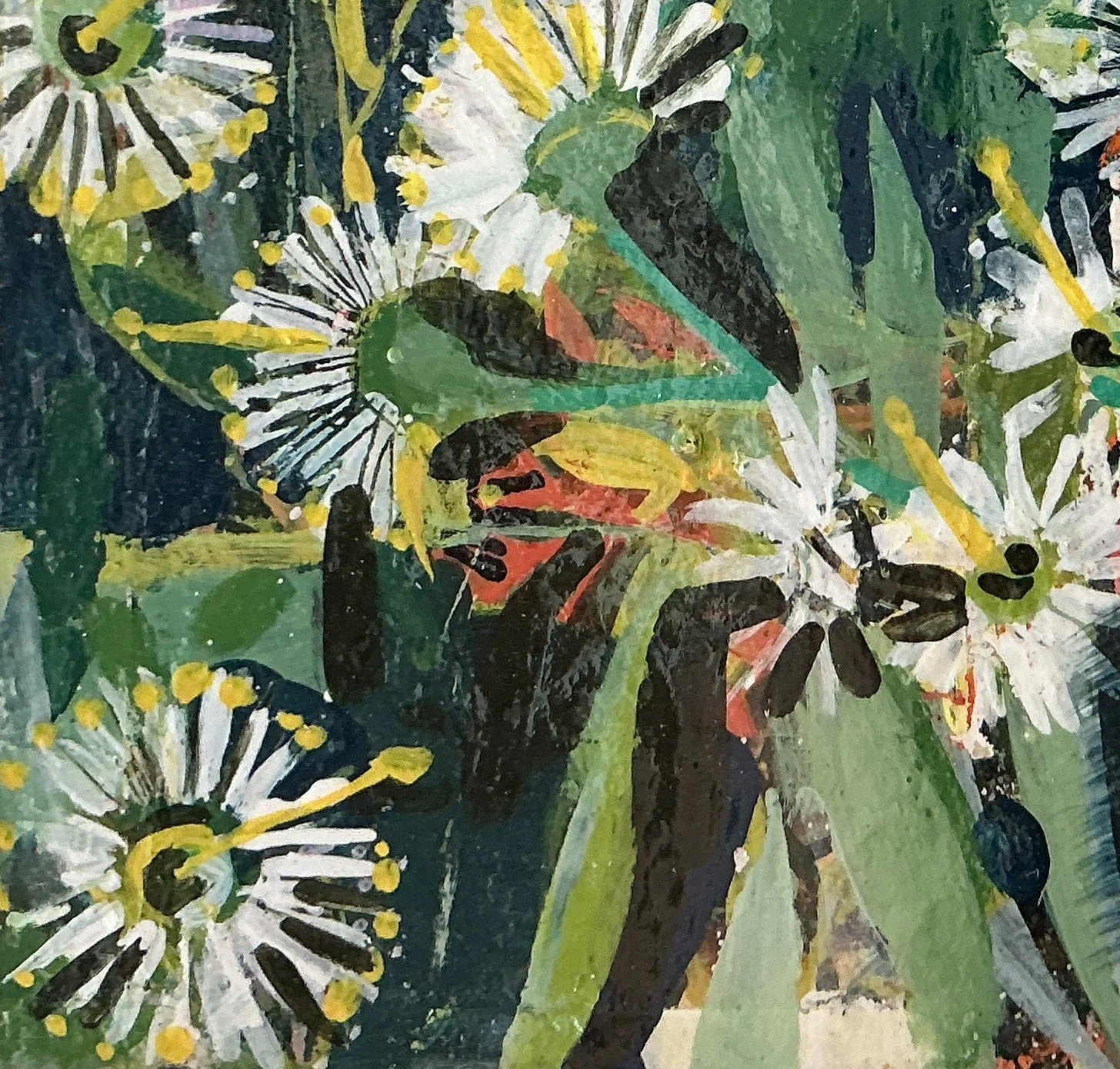
As part of my Field Notes Collection I made a drypoint print of each of my chosen plants or trees.
A drypoint is a print making technique, a little like copper plate.
I used a sharp stylus to draw the images into a foil card “plate”.
The plate is inked with an oil based ink. Ink is applied with a dauber and then wiped back with a cloth. This cleans the surface of the plate and leaves the ink in the lines of the drawing.
The paper needs to be damp as water expands the fibres of the paper. The plate and paper are put through an etching press. The pressure of the press pushes the softened paper into the lines and “ lifts” the drawing onto the paper.
I make an edition of 25 prints from each plate. The plate can only be used for a small edition as the card deteriorates over time.
Field Notes is divided into ten parts, each exploring a plant or tree I have encountered in my Brighton, 4017 neighbourhood. The specimens were observed on my daily dog walks, with a sample brought back to the studio where I made drawings and paintings from it.
I worked on this collection from January to October 2026, so the paintings also record the changing seasons and the flora of my new neighbourhood as the year unfolded.
As part of my Field Notes Collection I made a drypoint print of each of my chosen plants or trees.
A drypoint is a print making technique, a little like copper plate.
I used a sharp stylus to draw the images into a foil card “plate”.
The plate is inked with an oil based ink. Ink is applied with a dauber and then wiped back with a cloth. This cleans the surface of the plate and leaves the ink in the lines of the drawing.
The paper needs to be damp as water expands the fibres of the paper. The plate and paper are put through an etching press. The pressure of the press pushes the softened paper into the lines and “ lifts” the drawing onto the paper.
I make an edition of 25 prints from each plate. The plate can only be used for a small edition as the card deteriorates over time.
Field Notes is divided into ten parts, each exploring a plant or tree I have encountered in my Brighton, 4017 neighbourhood. The specimens were observed on my daily dog walks, with a sample brought back to the studio where I made drawings and paintings from it.
I worked on this collection from January to October 2026, so the paintings also record the changing seasons and the flora of my new neighbourhood as the year unfolded.